


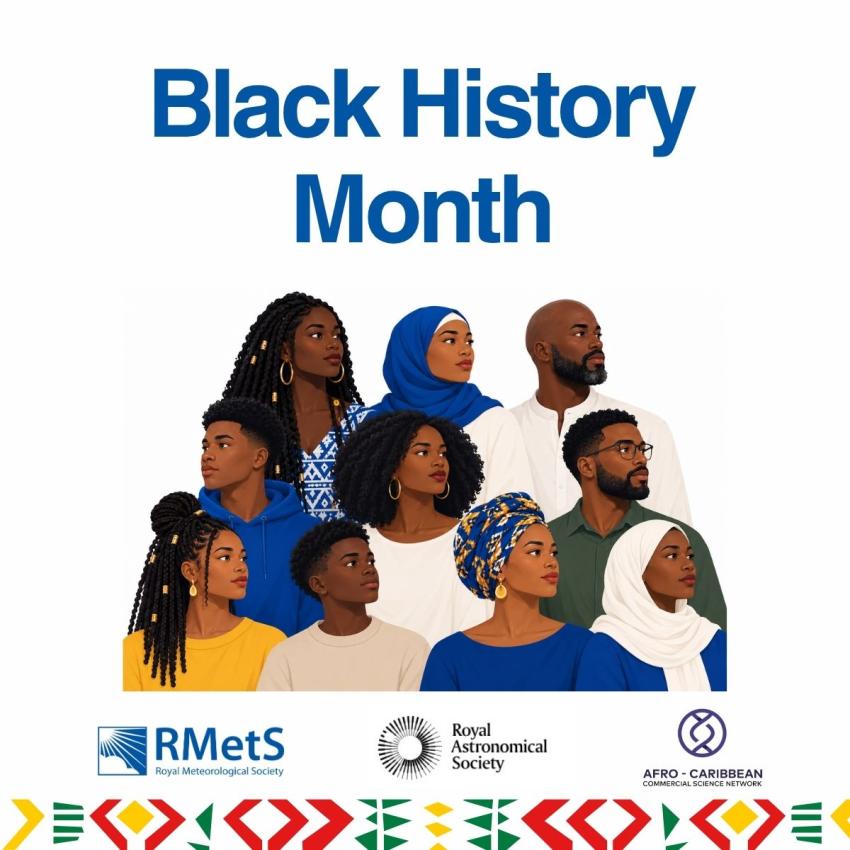

The Royal Astronomical Society (RAS) and the Royal Meteorological Society (RMetS) are joining forces this Black History Month to strengthen collaboration and knowledge exchange around equity, diversity and inclusion (EDI) across the science community.
As part of this new partnership, RMetS and RAS have both signed up to support the Afro-Caribbean Commercial Science Network (ACCSN), an organisation dedicated to raising the black and ethnic representation in the commercial science industry.
The partnership will begin with a joint social media campaign throughout October, highlighting opportunities and encouraging people from Black and ethnic communities to engage with science and the organisations and networks that support it.
The campaign will also lay the foundations for events and other collaborative activities planned for 2027 and beyond.
Why the partnership is needed
Astronomy inspires curiosity about the world beyond our own, but the opportunity to turn that curiosity into participation in astronomy is not shared equally.
Research by the RAS shows that people from minority ethnic backgrounds remain significantly underrepresented in UK astronomy and geophysics. Among British permanent staff responding to its 2023 demographic survey, 97 per cent were White, compared with around 83 per cent of the wider UK population.
For the RAS, improving representation is therefore about ensuring that talented people from all backgrounds have the opportunity to enter the field, progress in their careers, contribute to research and participate fully in the scientific community.
Working with organisations such as RMetS and ACCSN provides an opportunity to share experience across different scientific communities, build new connections and learn from organisations working to improve access, representation and career progression in science.
"Black History Month is a chance not only to celebrate the contributions of Black scientists, but also to look closely at who is represented in astronomy and geophysics today and where barriers remain," said Dr Marieta Valdivia Lefort, Policy and Diversity Officer at the RAS.
"We know there are no quick fixes but the hope is that this initiative will act as a springboard for meaningful change and better representation of people from Black and minority ethnic communities.
"Our goal is to give everybody, regardless of their background, the chance to make Nobel Prize-winning discoveries and answer some of humanity's biggest questions about the universe."
Why does representation in weather and climate science matter?
Weather and climate affect everyone. From extreme rainfall and heatwaves to changing patterns of drought, flooding and food production, decisions about how society understands and responds to our changing atmosphere have consequences for every community.
This means everyone should have a voice in the science that informs those decisions, as well as in discussions about how society manages their impacts.
For RMetS, improving diversity and inclusion is therefore not simply about who works in meteorology or climate science. It is also about ensuring that the people contributing to research, developing services, communicating risk and shaping future responses reflect the breadth of the communities affected by weather and climate.
Greater participation from people who have historically been underrepresented in science can bring different experiences, perspectives and questions to the field. It can also help ensure that the benefits of weather and climate science reach – and are relevant to – the widest possible range of people.
Working with organisations such as the RAS and ACCSN provides an opportunity to build connections beyond the traditional boundaries of individual scientific disciplines and to learn from others who are working to improve representation in science.
"Black History Month provides an important opportunity to reflect on who is represented within our scientific communities and whose voices are being heard," said Ella Clarke, Head of Business Development at RMetS.
"Weather and climate affect every part of society, so it is important that people from all backgrounds feel that there is a place for them in our community and that they can contribute to the conversations and decisions that shape our future."
Daniel Similaki, Founder of the ACCSN, said: "The ACCSN is delighted to welcome the Royal Astronomical Society and the Royal Meteorological Society as Bronze Sponsors.
"Both organisations are taking meaningful steps to strengthen diversity and inclusion, and their sponsorship of the ACCSN will help extend that commitment beyond their own organisations and across the wider astronomy, space, geophysics, weather and climate sectors they represent.
"Through this partnership, we will focus on community engagement, talent attraction and networking, creating opportunities to connect underrepresented talent with these sectors and their professional communities."
The partnership with RAS and ACCSN is an early step in a longer-term programme of collaboration. Through knowledge exchange, events and new opportunities for engagement, we hope to help create stronger connections between people and organisations across the science sector.
Follow RMetS and RAS on social media throughout October to take part in the Black History Month campaign and find out more about the opportunities available through ACCSN and the wider scientific community.